
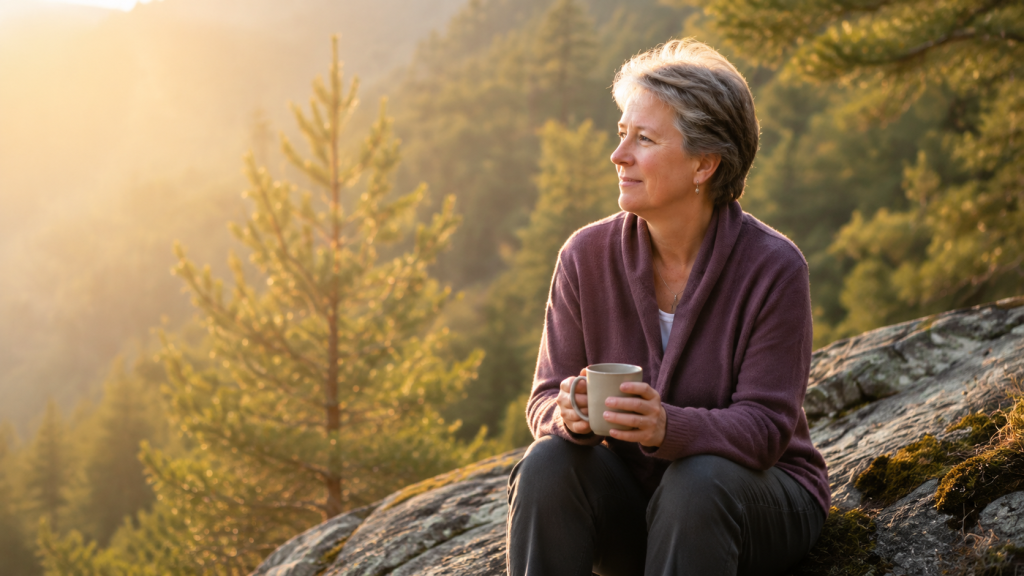
Where Peace Lives
Learning to Listen to Our Own Rhythm
I’ve been thinking a lot lately about peace.
Not the kind of peace that comes when everything is finished, everyone is happy, and life finally settles down.
But a quieter kind of peace.
The kind that comes when we stop fighting our own natural rhythm.
For much of my life, I’ve lived with an underlying sense of urgency. There was always something to accomplish, something to prepare for, something to figure out, or something that needed my attention.
Even the things I loved could become another item on the list.
And somewhere along the way, I began to notice how easily the pressure to do could crowd out the simple experience of being.
What If Peace Isn’t Something We Have to Earn?
We live in a culture that celebrates productivity, achievement, and constant forward movement.
We measure our days by what we’ve accomplished. We congratulate ourselves when we’ve been busy. And sometimes, even when we finally have an opportunity to rest, we find ourselves thinking about everything we should be doing.
But what if peace isn’t waiting on the other side of our accomplishments?
What if it’s available in the moments when we allow ourselves to stop striving?
A slow morning.
A walk beneath the changing autumn trees.
A cat curled up beside us.
A warm cup of tea.
A few quiet moments when nothing needs to be different from what it is.
These moments may seem small, but perhaps they’re not small at all.
Perhaps they’re where life is actually happening.
Learning to Trust Our Own Rhythm
Nature doesn’t move at the same pace every day.
There are seasons of growth and seasons of rest. Times of blossoming and times of letting go. Periods of activity followed by necessary stillness.
And yet, we often expect ourselves to maintain the same pace regardless of what is happening in our lives.
We forget that we, too, are part of nature.
Our energy changes. Our needs change. Our capacity changes.
Grief may ask us to slow down. Creativity may invite us to play. A new beginning may bring excitement and uncertainty at the same time.
Learning to honor our rhythm means listening to what is true today rather than demanding that today look like yesterday.
It means recognizing that rest isn’t a reward for finishing everything.
It’s part of living.
And it means allowing ourselves to follow genuine desire and inspiration rather than relying entirely on pressure to move us forward.
A Different Way of Living
Lately, I’ve been asking myself a different question.
Instead of What do I need to get done today?
I’m asking:
How do I want to experience my life today?
I still have responsibilities. I still have work I care deeply about. There are projects I want to create and dreams I want to bring into the world.
But I don’t want to miss my life while I’m busy building it.
I want to enjoy the mornings.
I want to notice the beauty around me.
I want to make room for creativity, connection, laughter, and the unexpected.
I want to trust that meaningful things can grow from joy and genuine desire, not only from effort and discipline.
And I want to remember that I don’t have to prove my worth through what I accomplish.
Perhaps you are longing for something similar.
An Invitation to Listen
As you move through this week, I invite you to notice your own rhythm.
When do you naturally feel energized?
When does your body ask for rest?
What activities leave you feeling nourished rather than depleted?
What happens when you give yourself permission to pause before automatically moving to the next thing?
You might even place a hand over your heart and ask:
What would feel kind and true for me right now?
You don’t have to change your entire life.
You can begin with one small moment of listening.
One choice made from trust instead of urgency.
One breath that reminds you that you are already here.
Already enough.
Already living a life worthy of your presence.
Maybe peace isn’t a destination we finally reach.
Maybe peace begins when we stop abandoning ourselves in the rush to get somewhere else.
With love,
Barb
Find your way back to yourself.